If you’re building a glamping site in Ireland, you’re choosing between three main accommodation types — pods, shepherd’s huts and yurts. They look similar on a price comparison spreadsheet, but they don’t deliver the same guest experience, and they don’t produce the same financial return per square metre over the life of the unit. Here’s how it really shakes out.
The guest experience question
Glamping is, at its heart, a comfort-vs-nature trade. Guests want a real bed, a hot shower, an indoor space to retreat to when it rains. But they also want to feel like they’re somewhere different — somewhere closer to the land than a Premier Inn. The accommodation type you choose decides where on that spectrum the experience lands.
A pod sits firmly on the comfort side. Solid walls, fixed windows, predictable interior. Some guests love it. Others tell us afterwards that it felt “like a static caravan with a curved roof”. Pods photograph fine on a listing but rarely become a talking point.
A shepherd’s hut nudges further toward character — the timber cladding, the iron roof, the rural pedigree. But they’re small. A standard hut is around 14–18 square metres internally and the interior feels enclosed once you put a double bed and a small wood stove inside.
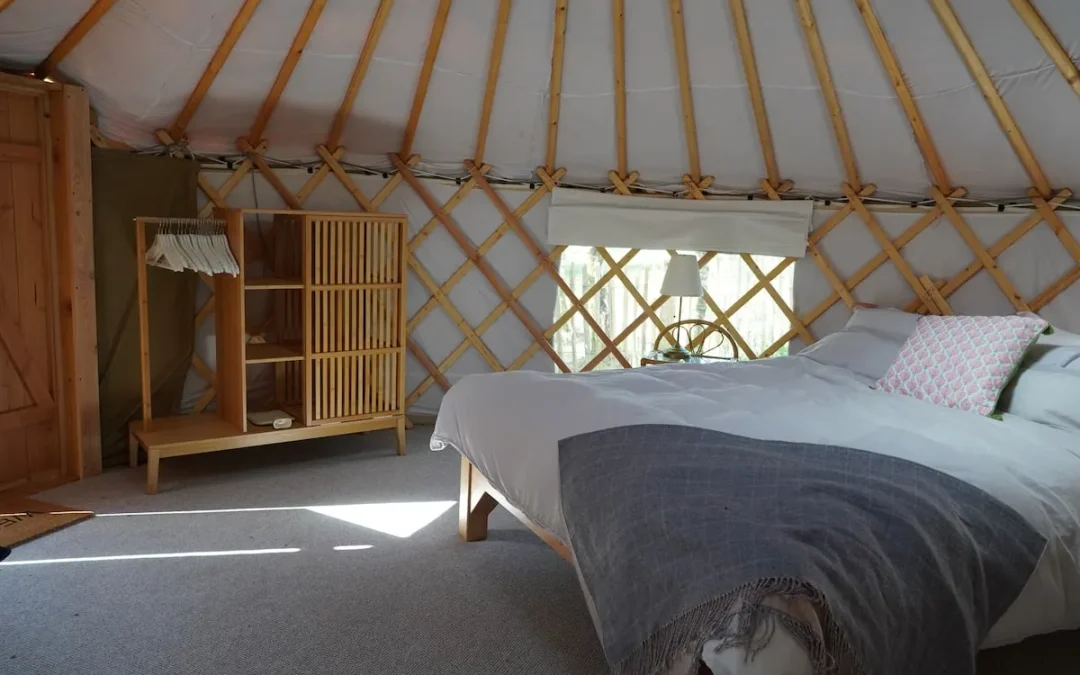
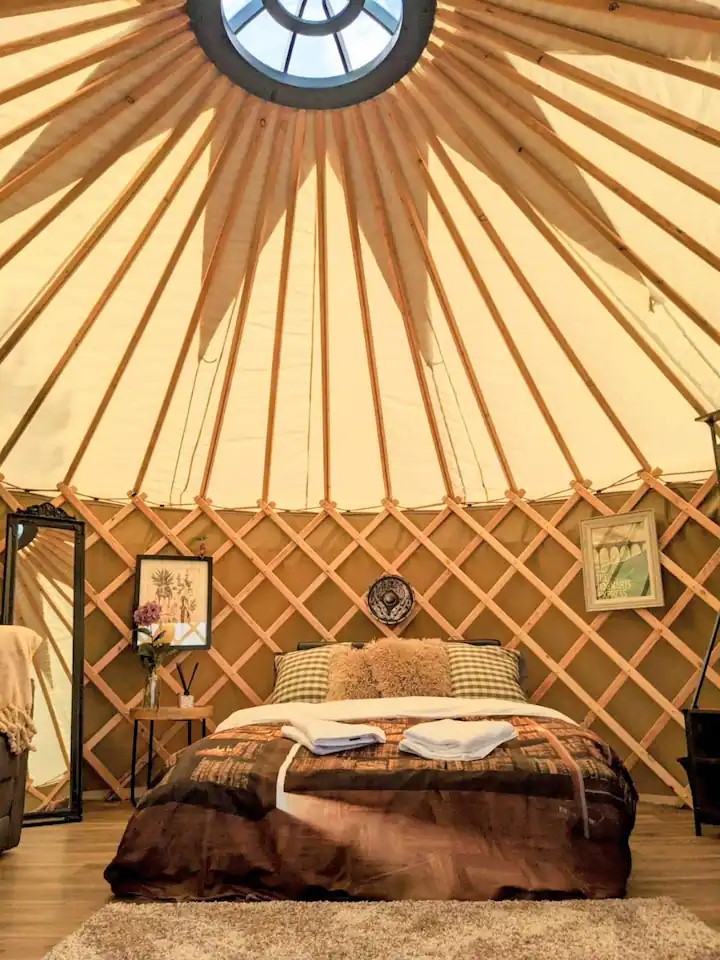
A yurt sits in a different category. The circular timber frame, the soft canvas glow, the open vertical space under the crown wheel — it changes the way the space feels. Guests photograph it the moment they arrive. The interior reads as warm, woody, atmospheric. It’s the closest thing to staying inside a piece of craftsmanship.
Not only is it beautiful, but when you’re inside a yurt you feel the comfort of being inside- whilst also feeling deeply connected to the outdoors. You can hear the sounds of the wind, the rain, the birds. There is a quality to the experience of being in a yurt that is very different to the feeling of being inside a conventional building. For people looking to get away from cities and experience glamping in nature, yurts really are the perfect combination.
Guests come for the yurt as much as the location. That’s the unlock — your accommodation becomes part of what they’re paying for, not just a place to sleep.
A glamping operator we work with in Mayo
The space comparison
Here’s where the numbers get interesting. Internal usable area for common glamping unit sizes:
- Standard glamping pod (5m × 2.4m): approximately 12 square metres.
- Shepherd’s hut (5m × 3m): approximately 15 square metres.
- 5m Celtic Yurt: approximately 19.6 square metres.
- 6m Celtic Yurt: approximately 28.3 square metres.
- 7m Celtic Yurt: approximately 38.5 square metres.
A 6m yurt gives you nearly twice the floor area of a standard pod and almost double a shepherd’s hut — for a comparable price. That’s the difference between a unit that sleeps a couple in a double bed and a unit that comfortably sleeps a couple plus a sofa, a wood stove and a small dining nook.
The vertical space matters too. A pod tops out around 2.1m. A yurt’s crown sits around 3 metres up. Standing inside a yurt feels open and lifted in a way a pod or hut never can.
The cost per square metre
This is the figure most operators miss when they’re comparing units side-by-side. Approximate cost-per-square-metre, including delivery, install and basic insulated platform:
- Glamping pod (€18,000 for 12 m²): ~€1,500 / m²
- Shepherd’s hut (€22,000 for 15 m²): ~€1,470 / m²
- 6m Celtic Yurt (€19,000 for 28.3 m²): ~€670 / m²
- 7m Celtic Yurt (€22,000 for 38.5 m²): ~€570 / m²
Per square metre, yurts come in at less than half the cost of pods or huts. That’s the financial reason so many operators we work with start with a pod and switch to yurts on their second or third unit — once they’ve seen the real cost per booked square metre.
Atmosphere — the thing you can’t spreadsheet
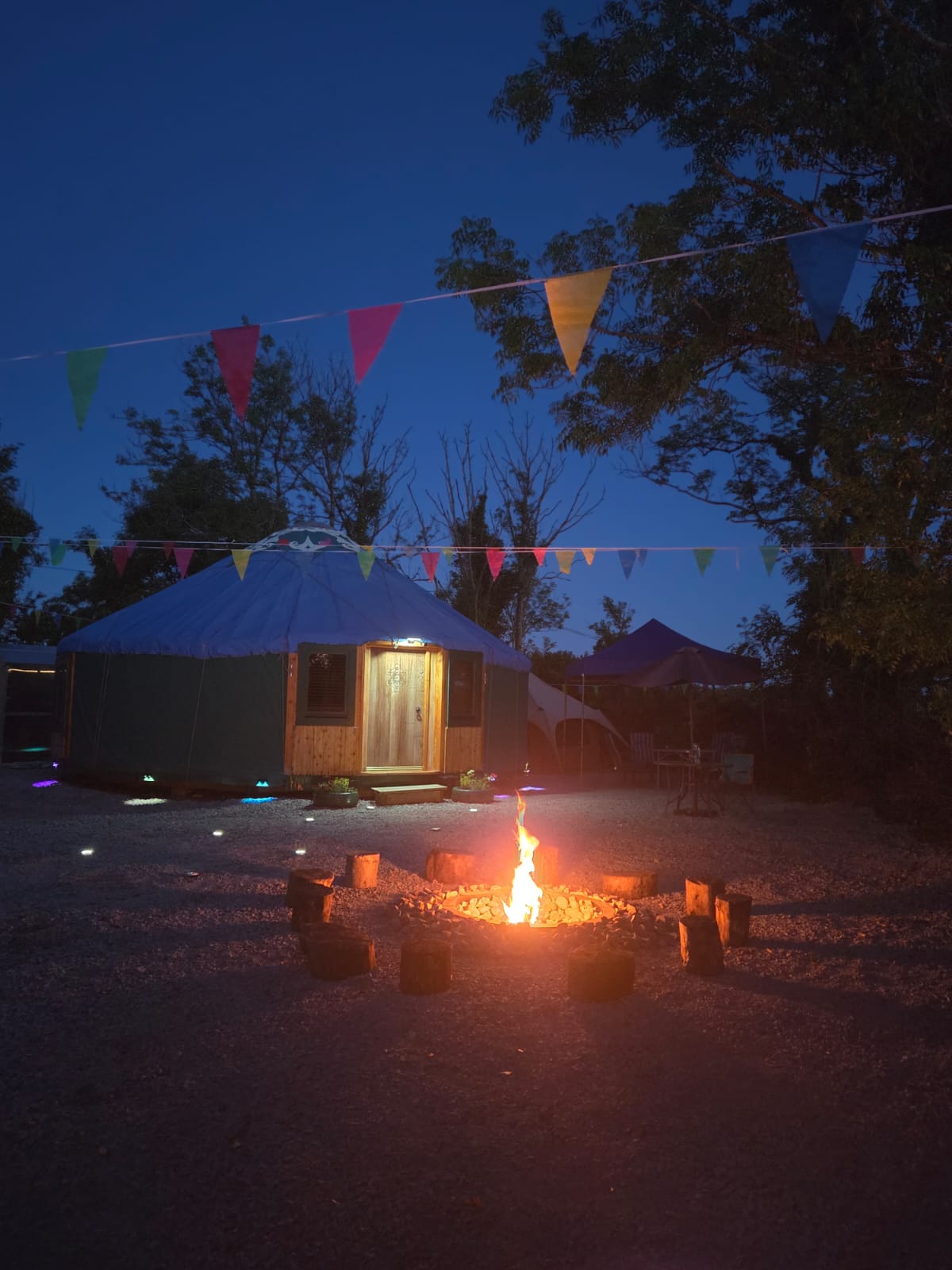
Eventually, every glamping operator we work with says the same thing: their yurts get the higher nightly rate, the longer stays, the repeat bookings and the social media photos. The reason isn’t any single feature — it’s the way the space feels.
A pod is a place to sleep. A yurt is part of the story your guests tell about the trip afterwards. That difference is the difference between competing on price and competing on experience.
Thinking about a yurt for your site? Build a transparent quote in about a minute and we’ll come back within one business day.