PLANNING GUIDE — IRELAND
Yurt Planning Permission in Ireland
Do you need planning permission for a yurt? The honest, up-to-date answer — for garden yurts, living full-time and glamping — with the exact rules, the July 2026 changes, and how to be 100% sure.
The short answer
It is the first question almost everyone asks us, and the honest answer is: it depends entirely on how you will use the yurt. In most garden cases you will not need planning permission at all. Here is the clear version.
Garden yurts: usually exempted development
Irish planning law does not mention “yurts” by name. Instead, a yurt placed in your garden falls under exempted development — the class covering a “tent, awning, shade or other object … greenhouse, garage, store, shed or other similar structure” within the curtilage (grounds) of a house. It is set out in the Planning and Development Act 2000 and the Planning and Development Regulations 2001, as amended.
If your yurt meets all of the following, you can put it up without planning permission:
- Size: the combined floor area of all such garden structures stays within the exempt limit — 25m² (rising to 30m² from 27 July 2026, see below).
- Height: no more than 3 metres for a structure without a tiled or slated pitched roof — which covers a canvas-roofed yurt. (A pitched, tiled/slated roof is allowed up to 4 metres, but that is not how yurts are built.)
- Position: it must be to the rear of the house — not forward of the front wall.
- Garden space: you must keep at least 25m² of private open space in the rear garden for the people living in the house.
- Use: it must be for a purpose incidental to your home — an office, studio, gym, hobby room, guest space — and not lived in as a separate dwelling.
Meet all five and, in the vast majority of cases, your garden yurt is exempt from planning permission.
New for 2026: the garden limit rises to 30m²
From Monday 27 July 2026, the exempted-development limit for back-garden structures increases from 25m² to 30m² (and home extensions rise from 40m² to 45m²). That gives you room for a larger yurt without planning permission. The Government also introduced a new exemption for a small, self-contained home of up to 45m² to the rear of your house, linked to the main house’s services (for owner-occupiers only) — worth knowing if a garden living space is your goal.
Which yurt sizes are exempt?
A yurt is round, so its floor area is roughly π × radius². Here is how our most popular sizes compare with the exempt limit — 25m² now, 30m² from 27 July 2026.
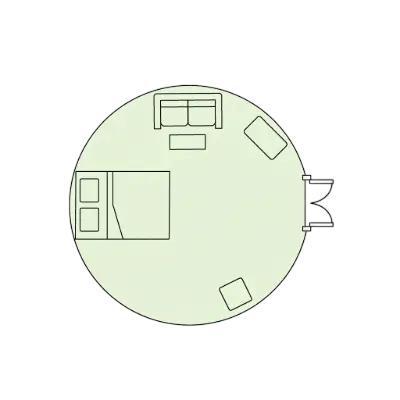
5m yurt · ~20m²
Comfortably exempt
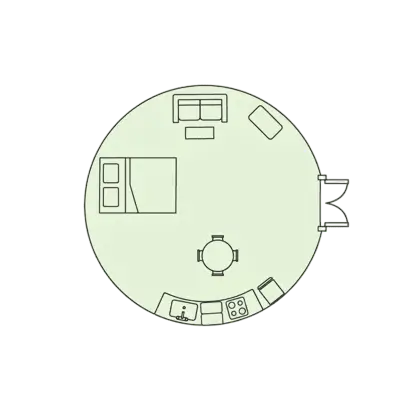
6m yurt · ~28m²
Within the new 30m² limit
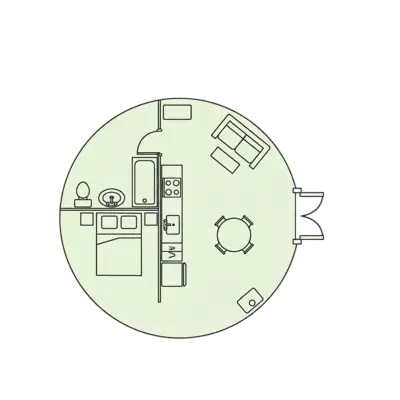
7m yurt · ~38m²
Would need permission
Approximate floor areas — exact usable space varies. See the full range on our yurts for sale page, or view pricing.
Living in a yurt full-time
This is where it changes. The garden exemption above specifically does not cover human habitation — so if you intend to live in your yurt as your home, you are creating a dwelling, and a dwelling needs planning permission. The same applies to putting a yurt on a rural or agricultural site to live in: agricultural exemptions are for farming structures, not homes, and residential use of the land usually needs permission (and can be subject to local rural-housing policy).
There are legal routes — applying for full planning permission for the yurt as a dwelling, or, from July 2026, the new back-garden auxiliary-home exemption (a serviced home of 32–45m² linked to your main house, for owner-occupiers). If living in a yurt is your plan, talk to your local authority (or a planning consultant) early, and remember the Building Regulations will also apply (see below).
Glamping and commercial yurts
Renting yurts to guests is a commercial use, and it needs planning permission — including a change of use if the land is currently agricultural or forestry. The good news: State agencies such as Teagasc actively encourage landowners to diversify into glamping, so councils are generally supportive of well-planned proposals. Before you apply, a pre-planning meeting with your local authority is wise — they will want to see how you handle access, fire safety, water, drainage and sanitation. We work with glamping operators across Ireland — see our glamping yurts.
Planning a garden studio, home or glamping yurt?
We’ll help you choose a compliant yurt and give you a clear, no-obligation quote.
Is a yurt a permanent structure?
It is the question people search for most, and the answer is nuanced. Under the Planning and Development Act 2000, “development” means carrying out works on land or making a material change of use, and “structure” is defined very broadly. So whether erecting a yurt counts as “development” that needs permission comes down to two things: how permanent it is, and how you use it. A canvas yurt used as ancillary garden space, within the size and height limits, is normally exempt. A yurt that is fixed down, connected to services, or lived in looks far more like a permanent dwelling — and is far more likely to need permission. In planning terms, it is the use and permanence that matter, not the word “yurt”.
Planning permission vs building regulations — not the same thing
A point that catches people out: being exempt from planning permission does not mean you are exempt from the Building Regulations. Planning permission is about whether you can put the structure there; Building Regulations (and Fire Safety) are about how it is built, and are especially relevant for any habitable or commercial use. A garden-office yurt has little to worry about here; a yurt you live in or rent out does. Factor in both.
When the exemption does not apply
Even a modest garden yurt can lose its exemption. You will generally need permission if:
- Your home is a protected structure, or the yurt would be within its curtilage.
- You are in an Architectural Conservation Area (ACA).
- The yurt would breach a condition of your house’s original planning permission.
- The structure exceeds the size, height, siting or open-space limits above.
If any of these apply, do not guess — get it checked.
How to be 100% certain: a Section 5 Declaration
For black-and-white certainty before you build, apply to your local council for a Section 5 Declaration — a formal written ruling on whether your specific yurt is exempted development or needs permission. It costs €80, uses the council’s declaration form (often “Form P07”) plus a site location map, and you get a decision within about four weeks. If you disagree, you can appeal to An Bord Pleanála. For most people a Section 5 is the cheapest possible peace of mind.
What if you build without permission?
If a yurt needs permission and you skip it, it is unauthorised development. Councils usually act on complaints from the public, and can issue enforcement notices requiring changes or removal, with fines for non-compliance. You may hear about the “seven-year rule” — that enforcement cannot begin more than seven years after works start. It is real but widely misunderstood: it may stop enforcement, but it does not make the development lawful. The structure stays unauthorised, which causes serious problems when you sell or mortgage. The clean route is to get it right up front, or apply for retention permission if you have not.
How Celtic Yurts helps you stay compliant
We build handcrafted yurts across Ireland every day, and we design them to work with the planning rules, not against them. We will help you choose a size that sits within the exempt limit, advise on siting in your garden, and provide the specifications and drawings you would need for a Section 5 Declaration or a full planning application. Tell us what you are planning and we will point you in the right direction — and give you a transparent quote.
Yurt planning permission: FAQs
Do you need planning permission for a yurt in Ireland?
Not usually, if it is a garden yurt used as extra space (office, studio, guest room) that stays within the exempted-development rules — under 25m² (30m² from 27 July 2026), no more than 3m high, to the rear of the house, keeping 25m² of open garden, and not lived in. Living in a yurt or using it for glamping does need permission.
How big can a yurt be without planning permission?
Up to the garden-structure limit — 25m² of combined floor area, rising to 30m² from 27 July 2026 — and no more than 3 metres high for a canvas-roofed yurt. Above that, you need permission.
Can you live in a yurt in Ireland?
You can, but a yurt lived in full-time is a dwelling and needs planning permission — the garden exemption does not cover being lived in. From July 2026 there is also a new exemption for a small serviced auxiliary home (up to 45m²) in the back garden, for owner-occupiers, linked to the main house. Building Regulations apply to any home.
Do I need planning permission for a glamping yurt?
Yes. Renting yurts to guests is commercial use and needs planning permission, usually including a change of use from agricultural land. Councils are generally supportive of glamping as rural tourism.
Is a yurt considered a permanent structure?
It depends on how permanent it is and how it is used. A temporary canvas yurt used as ancillary garden space is normally exempt; a fixed, serviced or lived-in yurt behaves like a permanent structure and is more likely to need permission.
How do I check if my yurt needs permission?
Apply for a Section 5 Declaration from your local council — €80, a simple form and site map, and a decision in about four weeks. It is the definitive way to know.
Thinking about a yurt? Let’s get it right.
Whether it’s a garden studio, a full-time home or a glamping venture, we’ll help you choose a compliant yurt and give you a clear quote.
This guide is general information, not legal advice, and reflects the rules as of July 2026. Planning is interpreted locally and can change — always confirm with your local planning authority or a chartered planning consultant/surveyor before you build. A Section 5 Declaration gives you a formal ruling for your specific case.