
Across Ireland, more people are stepping away from the conventional housing route and looking at smaller, smarter, more modular ways to build. Some are priced out of the property market. Some want a low-impact way to own their own place. Others just want to live somewhere beautiful without locking themselves into a 35-year mortgage. A handcrafted yurt is increasingly part of that conversation — and for good reason.
At Celtic Yurts we’ve been building yurts for full-time living in Ireland for over twenty years. What we keep hearing from customers is that the appeal isn’t novelty — it’s the way a yurt fits into a modular way of life. You start with one. You add another. You move them when the land or the family changes. It’s housing that flexes with you.
What “modular” actually means with a yurt
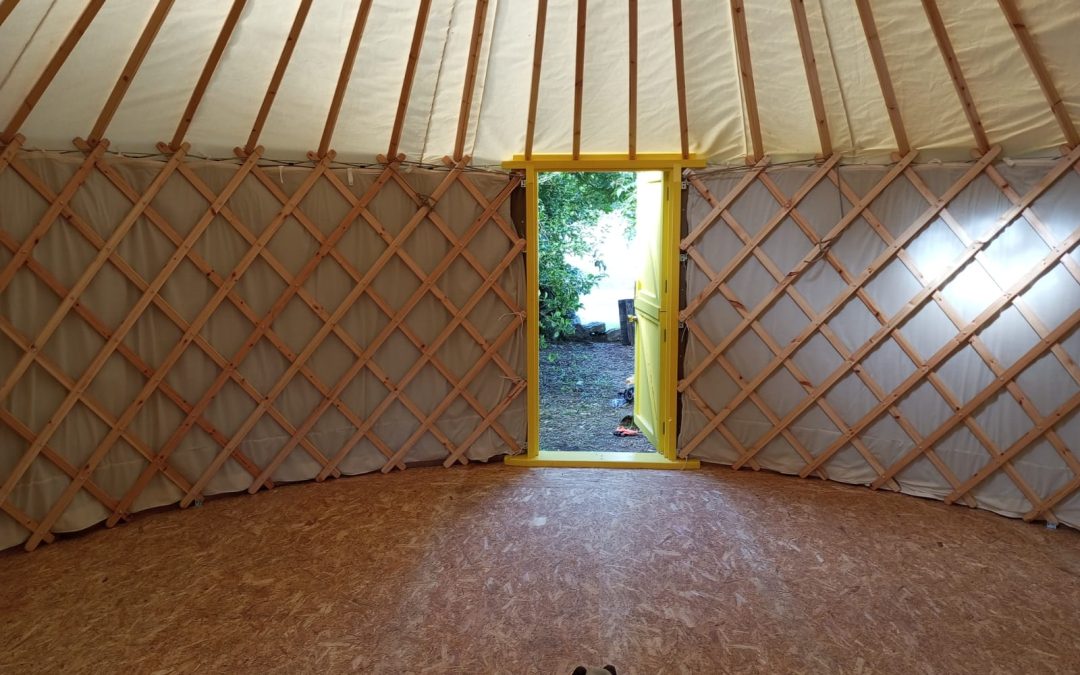
In the housing world, modular usually means factory-built sections lifted onto a site by crane. With a yurt, modular has a softer meaning. Each yurt is a self-contained living space — circular, insulated, watertight, heated by a wood stove — that ships flat and is assembled on-site in a single day. A 6m yurt becomes a sleeping unit. An 8m yurt becomes a living and kitchen unit. Connect them with a small timber walkway or porch and you’ve built a home, piece by piece, without a single concrete pour.
Because the build is timber frame, canvas and sheep’s wool insulation — no foundations, no masonry — you can do most of it yourself, or with a small build crew, in days rather than months. And because every yurt is its own discrete module, you can grow the home as you go. Adding a third yurt as a studio or guest room two years down the line is a weekend project, not a renovation.
Why people are choosing modular yurts in Ireland
Cost
A fully-finished 7m Celtic Yurt — insulated, double-glazed window, solid timber door, wood-burning stove, installed on a platform — typically lands in the €20,000–€28,000 range. Even adding a second yurt and a connecting porch, you’re still under €50,000 for a multi-room family home. Compared to a conventional self-build at €2,500–€3,500 per square metre, that’s a different financial conversation entirely.
Speed
From order to installed-on-site is typically 6–10 weeks. The install itself is a day. There’s no foundation cure time, no plastering schedule, no waiting for the second-fix joiner. You can be sleeping in your yurt the same week the platform is finished.
Sustainability
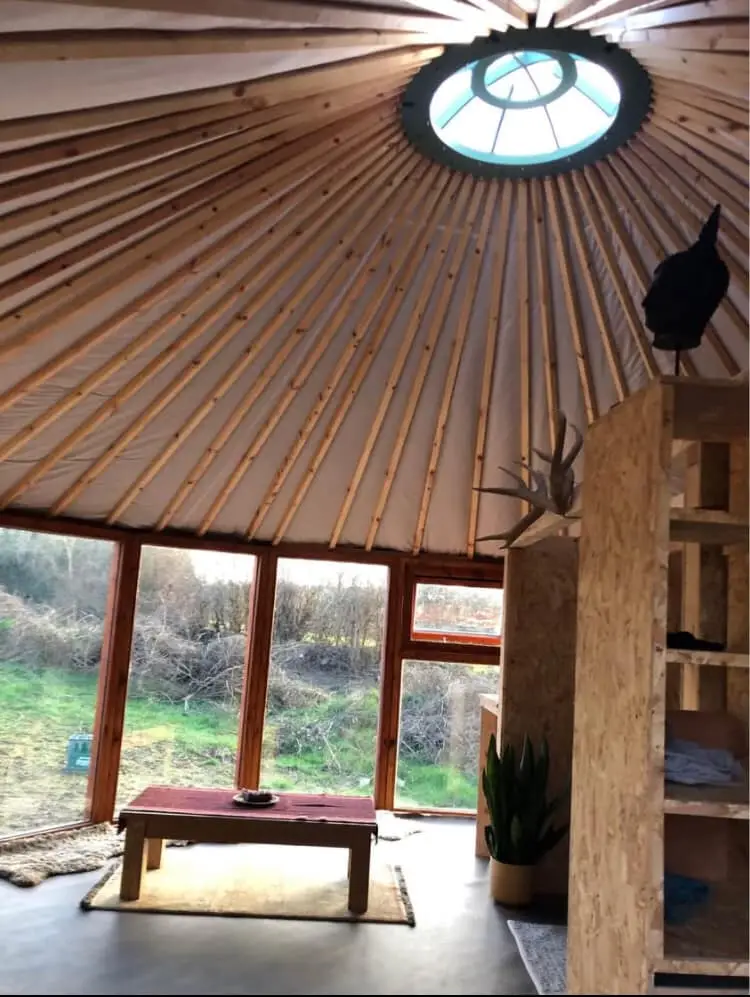
The yurt is made from sustainably sourced timber including Irish-grown Douglas Fir, breathable Regentex canvas and natural sheep’s wool insulation. There’s no concrete, no PIR foam, no plastic membrane. If you ever move the yurt, the ground recovers — the platform comes apart, no landfill, no demolition skips. Few housing types in Ireland have a smaller embodied carbon footprint.
Reversibility
This is the quiet feature that surprises people. A yurt isn’t a forever decision. If your circumstances change — you move counties, the kids grow up, the land gets sold — the yurt comes down, packs into a horsebox-sized load and goes with you. Try doing that with a built extension.
How a modular yurt home actually works
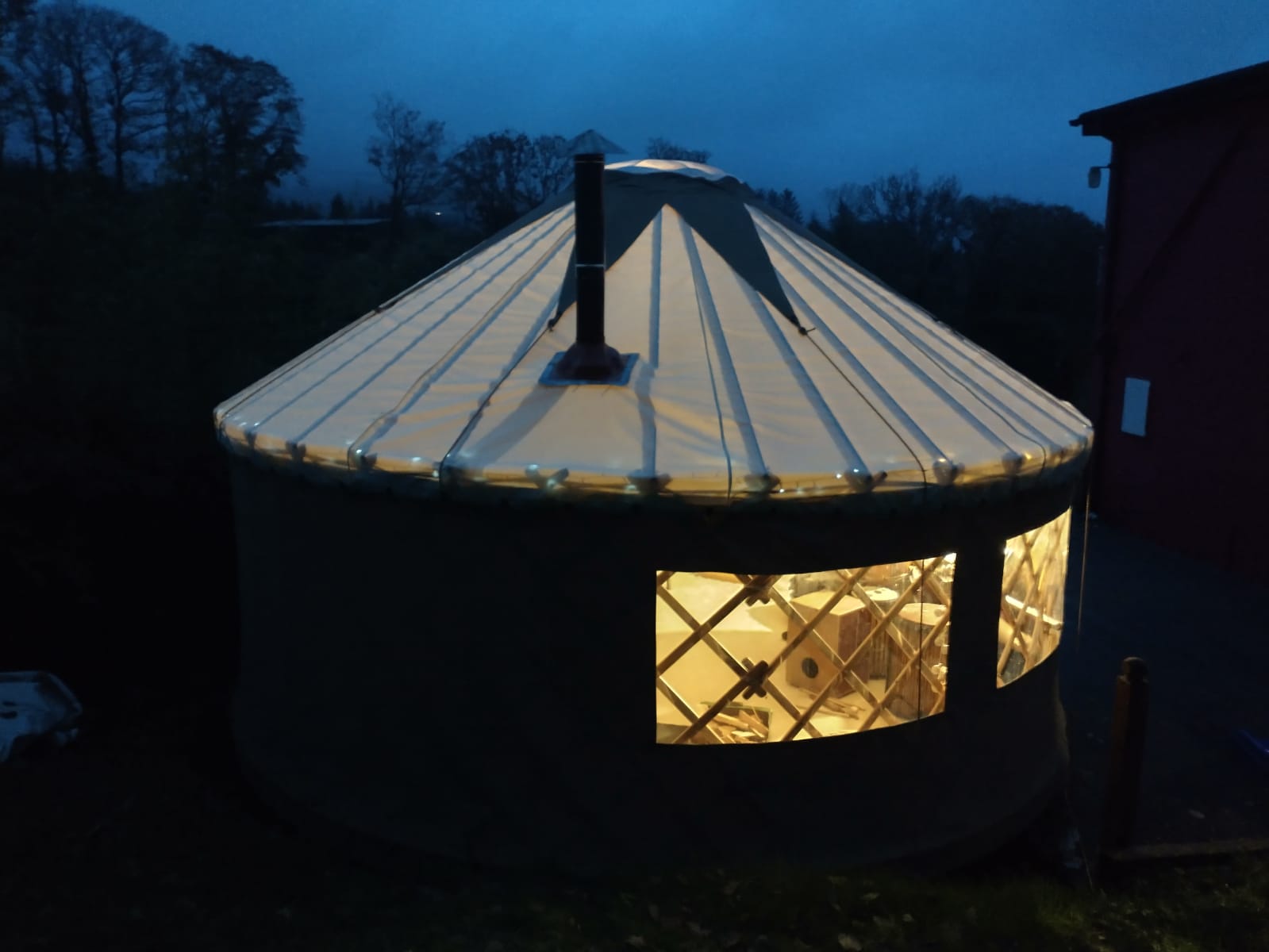
The most popular setup we’ve seen evolve over the years is two yurts plus a connecting structure:
- Yurt 1 — sleeping: a 5m yurt as the bedroom, with built-in wardrobe, bedside lighting and a small reading corner.
- Yurt 2 — living and kitchen: a 7m or 8m yurt with kitchen counter, wood stove, dining table and a couch zone around the stove.
- Connecting porch: a small enclosed timber porch with a toilet, shower and storage between the two yurts.
Total footprint is around 65–75 square metres of internal space. Total cost (yurts, connecting porch, off-grid services) usually lands well under €60,000. It’s a real home for a single person, a couple or a small family — and you can add a third yurt later for a studio, an office or a teenager who needs their own space.
Planning, services, and the practical bits
Planning rules for yurts vary by county. Many of our customers run their yurts under domestic exempt development rules where applicable, or as part of a low-impact planning application.
For services, off-grid setups using a composting toilet, solar PV and rainwater harvesting are common. So are hybrid setups with mains electricity and a standard septic system. The yurts themselves are designed to be flexible — we leave clean entry points for electrics and plumbing wherever you want them.
Is a modular yurt right for you?
If you’re looking for a low-impact, beautiful, genuinely affordable way to own your own home in Ireland, a modular yurt setup is one of the most under-appreciated options out there. It won’t suit everyone — if you want four bedrooms and a fitted utility room, you want a conventional build. But for couples, single people, retirees, young families, freelancers and anyone who wants a different kind of life close to the land, it works beautifully.
Thinking about a yurt for your site? Build a transparent quote in about a minute and we’ll come back within one business day.